7 Steps to Becoming a CNA in California

Last Updated: October 23, 2026
Quick Summary
Becoming a CNA in California requires completing 160 hours of CDPH-approved training, passing a health screening and immunizations, submitting an application to the state, and passing the NNAAP exam covering written knowledge and clinical skills. You must be at least 16 years old and hold a high school diploma or GED before certification.
California requires a minimum of 160 fixed training hours split between classroom instruction and 60-80 hours of hands-on clinical training.
You must pass a health screening, provide proof of immunizations including measles, mumps, rubella, tetanus, and varicella before starting clinical work.
The NNAAP exam includes a written test of roughly 60 multiple-choice questions and a clinical skills evaluation with randomly assigned tasks.
A single critical error such as skipping hand hygiene or unsafe transfer mechanics fails the entire skills portion of the exam.
After passing, verify your name and certificate number on the public registry before applying for jobs, as employers check this during hiring.
Table of Contents
Step 1: Confirm Your California CNA Requirements and Eligibility
Step 2: Enroll in a CDPH-Approved CNA Training Program
Step 3: Complete Your CNA Training Hours in California
Step 4: Pass Your Health Screening and Immunization Requirements
Step 5: Submit Your California CNA Application
Step 6: Register for and Pass the California CNA Exam
Step 7: Receive Your Certification and Plan Your Next Move
Frequently Asked Questions
Step 1: Confirm Your California CNA Requirements and Eligibility
Becoming a CNA in California starts with understanding the eligibility requirements set by the California Department of Public Health (CDPH). You must be at least 16 years old to enroll in a CNA training program, though most programs recommend being 18 or older for clinical placements in hospitals and care facilities. This foundational step prevents wasted time on applications that won't move forward.
The CDPH requires that you have a high school diploma or GED before you can sit for the state exam. Some programs allow you to enroll in training while working toward your diploma, but certification won't happen until you have proof of completion. If you're still in high school, check with your school counselor about dual-enrollment options at CDPH-approved training programs in your area.
You'll also need to be prepared for a background check and fingerprinting through Live Scan. The CDPH reviews criminal convictions on a case-by-case basis, a conviction doesn't automatically disqualify you, but certain offenses related to violence or abuse may. Getting clarity on this early prevents disappointment later.
Pro Tip Start gathering your documents now: birth certificate, Social Security card, state ID, and proof of high school diploma or GED. Having these ready speeds up enrollment and application processes.
Step 2: Enroll in a CDPH-Approved CNA Training Program
Not all nursing assistant training programs are created equal. California requires that your program be CDPH-approved to qualify for state certification. This approval means the curriculum meets state standards for both classroom instruction and hands-on clinical training. When you're evaluating programs, always verify CDPH approval on their website or by calling the program directly.
Program formats vary significantly. Some offer full-time intensive courses lasting 4-6 weeks, while others spread training across 8-12 weeks with evening or weekend classes. Life Vest Training offers a flexible hybrid learning model that combines essential hands-on labs with convenient digital coursework, allowing you to balance training with work or school commitments. The hybrid approach means you attend hands-on labs in person while completing theory online, a practical option if you're managing multiple responsibilities.
When choosing a program, consider these factors: location and commute time, schedule flexibility, instructor experience, and whether the program includes CPR certification (which you'll need anyway). Some programs bundle CPR into tuition; others charge extra. Ask about the program's pass rate on the state exam, this is a real indicator of quality. Programs with higher pass rates typically have better instruction and exam preparation.
Key Takeaway CDPH-approved status is non-negotiable. Completing an unapproved program means starting over. Always verify approval before enrolling.
California Department of Public Health CNA Initial Application
Step 3: Complete Your CNA Training Hours in California
California requires a minimum of 160 hours of training for CNA certification. This includes both classroom instruction and hands-on clinical training. The 160-hour requirement is fixed, you cannot skip hours or test out early. Programs structure these hours differently, but all must meet the state standard.
Classroom instruction covers anatomy, physiology, patient safety, infection control, communication skills, and legal/ethical responsibilities. This theory foundation matters because you'll apply it directly in clinical settings. Online theory instruction, when offered, allows flexibility, but hands-on clinical training must happen in person under instructor supervision.

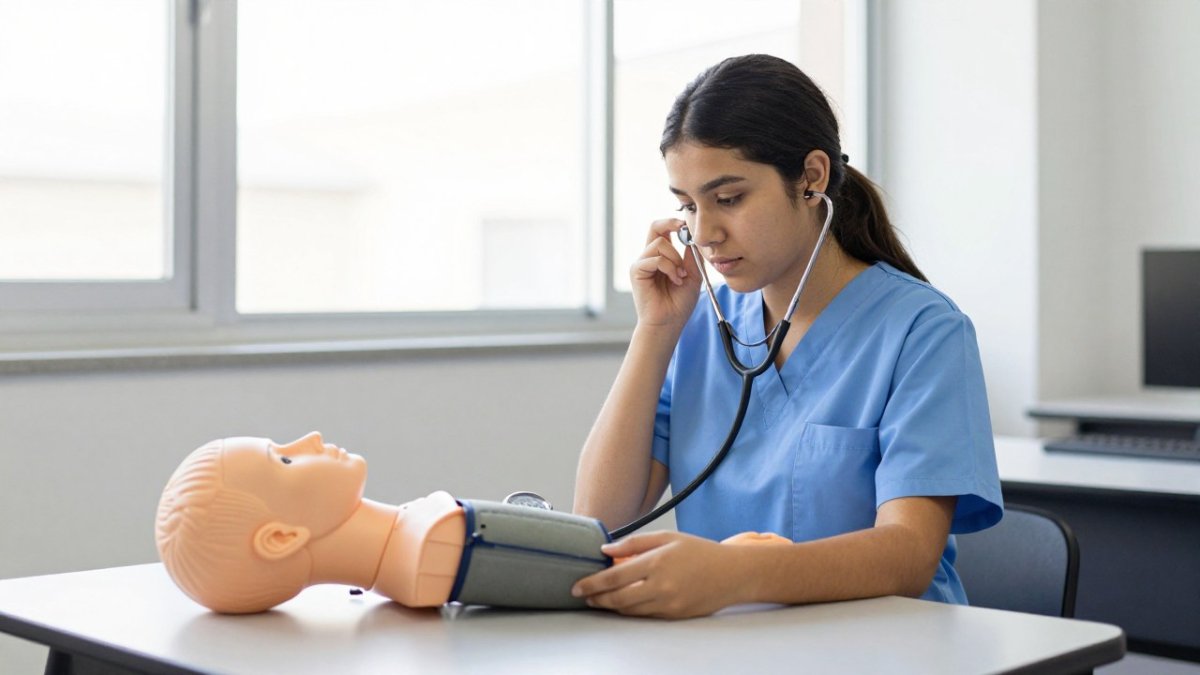
The hands-on portion is where real competency develops. You'll learn vital signs, hygiene assistance, catheter care, patient transfers, and communication with healthcare teams. Expect to spend at least 60-80 hours in clinical settings. This is demanding work, you're on your feet, managing patient needs, and learning to work under pressure.
Watch Out Falling behind on clinical hours is common. If your schedule becomes unstable, address it immediately with your program coordinator. Missing hours means delayed certification, not a shortened program.
RegisteredNursing.org CNA Training Hours Guide
California CNA training requires a fixed minimum of 160 hours split between classroom and clinical work.
Component | Hours | Details |
Total required training | 160 | Fixed requirement, cannot be shortened |
Classroom instruction | Varies | Covers anatomy, physiology, safety, infection control |
Clinical training | 60-80 | Hands-on practice in hospitals, nursing homes, assisted living |
Program duration (full-time) | 4-6 weeks | Intensive format |
Program duration (part-time) | 8-12 weeks | Evening or weekend classes |
Step 4: Pass Your Health Screening and Immunization Requirements
Before you can begin clinical training, California requires a health screening and proof of current immunizations. This protects both you and the patients you'll care for. You'll need documentation of immunity to measles, mumps, rubella, tetanus, and varicella (chickenpox). Some facilities also require hepatitis B and tuberculosis testing.
Schedule your health screening with your primary care doctor or a clinic that handles occupational health exams. Bring documentation of your immunization history. If you're missing immunizations, get them updated before starting clinical training, programs won't let you work with patients without proof of immunity. The cost of immunizations varies, but many community health clinics offer them on a sliding scale.
You'll also need a tuberculosis skin test (Mantoux test) or chest X-ray, depending on your facility's requirements. Results must be negative or show prior treatment. This screening typically costs between $50-$150 and takes 48-72 hours for results.
California Immunization Requirements for Healthcare Workers
Best For Students completing training at Life Vest Training benefit from all-inclusive tuition that covers textbooks, lab supplies, and CPR certification, simplifying the process and reducing hidden costs.
Step 5: Submit Your California CNA Application
Once you've completed your 160 training hours, you're eligible to apply for the California CNA state exam. The application process involves submitting proof of training completion, your health screening results, immunization documentation, and a declaration regarding criminal convictions. The CDPH reviews applications to ensure all requirements are met before you're cleared to test.
Applications are submitted online through the CDPH portal. You'll need to create an account, upload your training certificate, and pay the application fee. Processing typically takes 2-4 weeks. During this time, the state verifies that your program was CDPH-approved and that your training hours were completed under approved instructors.
If you have a criminal history, disclose it honestly on your application. The CDPH doesn't automatically deny certification for convictions, they evaluate each case individually. Violent crimes, abuse-related offenses, and certain drug convictions are more likely to result in denial, but other offenses may not. Getting legal clarity before applying prevents surprises.
Pro Tip Keep copies of all submitted documents. If the state requests clarification or additional information, you'll have everything ready. Delays often happen because applicants can't quickly produce proof of immunizations or training completion.
Step 6: Register for and Pass the California CNA Exam
The California competency exam is delivered through the National Nurse Aide Assessment Program (NNAAP), which the state uses to test both knowledge and hands-on skill. You cannot register until the CDPH has approved your application and issued you an eligibility notice, so this step begins the day that notice arrives, not the day you finish training.
How registration actually works. Once cleared, you receive instructions to schedule through the NNAAP testing vendor's portal. You pick a testing site and date from the available windows, pay the exam fee at scheduling, and receive a confirmation with your test location and arrival time. Bring two forms of government-issued ID, your eligibility notice, and the confirmation.
The written (knowledge) test. Expect roughly 60 multiple-choice questions covering patient care, safety and infection control, communication, residents' rights, and legal/ethical responsibilities. You typically get about two hours. The passing standard is set by the state, not by your training program, so ignore any program that quotes its own passing percentage.
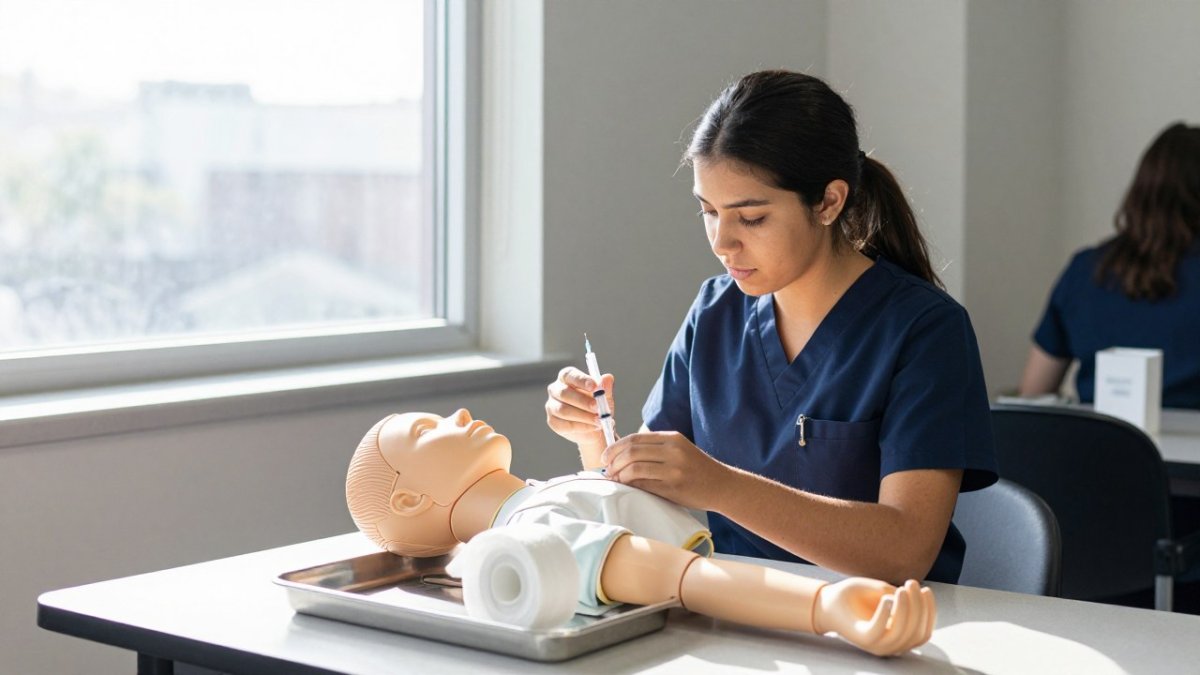
The clinical skills evaluation. You are evaluated on a set of randomly assigned skills drawn from the state's published skill list, plus one or two mandatory tasks such as handwashing. Each skill is scored pass-or-fail against a checklist, and a single critical (unsafe) error on any assigned skill fails the entire skills portion. Common critical errors include skipping hand hygiene, failing to verify identity or privacy, unsafe transfer mechanics, and incorrect measurement technique.
Fees, retakes, and timing. The exam fee is paid to the testing vendor and is separate from any CDPH application fee; confirm the current amount on the vendor's scheduling page before you budget, because it changes.
Watch Out A no-show or late arrival usually counts as a failed attempt and still costs you the fee. Confirm your site, parking, and arrival time the day before.
Key Takeaway The written test rewards handbook review; the skills test rewards repetition against the official checklist. Learn what CNA state exam pass rates reveal about test difficulty and preparation strategies. Treat them as two separate preparation projects.
NNAAP Candidate Handbook and Test Blueprint
California Department of Public Health Nurse Assistant Certification
Step 7: Receive Your Certification and Plan Your Next Move
Passing both exam components is not the finish line, it is the point where the state issues your certificate and enters you on the nurse aide registry. This final step is where most guides stop, and it is where the practical questions actually begin.
Confirm your registry listing before you apply for jobs. After the state processes your results, verify that your name, certificate number, and status appear correctly on the public registry lookup.
Understand the renewal cycle. Certification is time-limited, and renewal is not automatic.
What employers require at onboarding. Beyond your certificate, expect a background check (often a fresh Live Scan even if you were printed for training), a physical or health clearance, current immunizations including TB testing, and often CPR certification.
Work-status and reciprocity questions. If you move or want to work in another state, most states require you to apply for reciprocity or endorsement and verify your active, unencumbered status on the registry. An inactive or lapsed certificate usually blocks reciprocity until it is reinstated.
Where the credential leads. Your CNA experience is the most common on-ramp to nursing school, and admissions committees generally value direct patient-care hours. Explore how CNA certification strengthens nursing school applications as your next career step.
Pro Tip Set a calendar reminder 90 days before your certification expires. Renewal windows are easy to miss when you are working full shifts.
Key Takeaway The certificate gets you hired; keeping the registry status active and your hours logged is what keeps you employed and eligible to move between states.
Nurse Aide Registry Verification and Renewal
Frequently Asked Questions
What are the eligibility requirements to become a CNA in California?
To become a CNA in California, you must be at least 16 years old and have a high school diploma or GED. You must also complete a CDPH-approved CNA training program, pass a health screening and immunizations, and pass the California CNA exam. Background checks via Live Scan fingerprinting are required; convictions may affect eligibility depending on the offense.
How many training hours are required for CNA training hours in California?
California requires 160 hours of CNA training. This includes both classroom instruction and hands-on clinical training. Hybrid programs, which combine online theory with in-person labs, allow you to spread coursework over a longer timeline while maintaining flexibility for work or other commitments.
What is covered on the California CNA exam?
The California CNA exam includes a written knowledge test and a clinical skills evaluation. The knowledge test covers patient care, safety, communication, and infection control. The clinical skills portion assesses your ability to perform essential tasks like vital signs, hygiene, and patient movement. Exam preparation is typically included in your training program, and many programs offer practice exams to build your confidence.
How long does the entire California CNA certification process take?
The timeline depends on your program format and pace. After finishing your course, you submit your California CNA application and register for the state exam, which can be scheduled within 1 to 2 weeks.
Claim Your Seat Now
Add lifevesttraining.com as a preferred source on Google →

Comments