CNA Class Starts November 9, 2026: Schedule & Enrollment

Table of Contents
CNA Class Starts November 9, 2026: What You Need to Know
Class Schedule and Daily Start Times
Day, Evening, and Weekend Options
CNA Training Program Length and End Dates
CNA Class Enrollment Requirements and Prerequisites
CNA Class Preparation Checklist: Get Ready Before Day One
Hands-On Skills Training and Course Curriculum
CNA Certification Exam Registration After Training
Hybrid Learning: In-Person Labs and Online Coursework
Frequently Asked Questions
Last Updated: October 8, 2026
CNA Class Starts November 9, 2026: What You Need to Know
A certified nursing assistant certification opens doors to immediate employment in hospitals, clinics, and long-term care facilities. If you're considering healthcare as a career path, understanding what a CNA class starts November 9, 2026 entails is your first step toward launching that journey. At Life Vest Training, we've designed our CNA program to fit working professionals and career changers who need flexibility without sacrificing quality education.
The November 9 start date marks the beginning of one of our cohorts. This timing works well for people planning a career transition before the new year or those who've been researching programs and are ready to commit. Our five-week intensive track compresses essential nursing assistant training into a manageable schedule that doesn't require you to abandon your current job.
Here's what you need to know before enrollment day arrives: the program combines hands-on clinical skills with flexible online coursework, covers all materials and CPR certification in tuition, and prepares you for state certification exams. We'll walk you through every detail so you can decide if this November cohort fits your timeline.
Class Schedule and Daily Start Times
The CNA class starts November 9, 2026 with multiple schedule options designed around real-world constraints. Not everyone can attend a traditional 9-to-5 program, which is why we offer day, evening, and weekend sections of the same curriculum.
Day, Evening, and Weekend Options
Day classes run from 8:00 AM to 12:30 PM, Monday through Friday. The compressed morning schedule lets you work afternoons or dedicate time to studying.
Evening classes meet from 5:30 PM to 10:00 PM, also Monday through Friday. This schedule is built for full-time employees who can't leave their jobs mid-week. You'll attend class after work and complete online modules during lunch breaks or early mornings.
Weekend intensive sessions compress the same content into Saturday and Sunday blocks from 8:00 AM to 4:00 PM. The weekend pace is faster, but the curriculum remains identical.
All class sections start November 9, 2026. Enrollment deadlines vary slightly by schedule option, so confirming your preferred time slot early matters. Once you select your schedule, you'll receive specific start times and classroom locations. The hybrid learning approach means some sessions happen on campus for hands-on skills training, while other coursework moves to our online platform.
CNA Training Program Length and End Dates
A CNA training program length at Life Vest Training spans five weeks from start to finish. This compressed timeline doesn't mean shortcuts, it means efficient, focused instruction without filler content.
Your program will end approximately December 13, 2026, assuming you maintain consistent attendance and complete all required coursework. The five-week window includes classroom instruction, hands-on skills labs, online modules, and preparation for the state certification exam.
The five-week structure works because we've eliminated busywork. Every hour covers material you'll encounter on the certification exam or use in actual patient care. Day, evening, and weekend cohorts all follow the same five-week calendar, so your end date depends only on which schedule you choose, not on program length differences.
Between program completion and your certification exam, you'll have time to study and schedule your test with the state. Most graduates test within two weeks of finishing the course.
CNA Class Enrollment Requirements and Prerequisites
CNA class enrollment requirements are straightforward, but they matter. You'll need to be at least 18 years old and have a high school diploma or GED.
You'll also need a valid government-issued ID and proof of residency. Background checks are standard, Life Vest Training conducts them as part of enrollment, and most clinical sites require them before you step into a patient care setting.
CPR certification isn't a prerequisite because we include CPR training in our program. You'll earn your CPR card as part of the course, so you don't need to pay for separate certification elsewhere.
Physical requirements exist for nursing assistant work. You should be able to lift and move patients (often 50 pounds or more), stand for extended periods, and perform repetitive motions. If you have mobility concerns, discuss them with our admissions team before enrolling.
English language proficiency matters. You'll read medical terminology, take written exams, and communicate with patients and clinical staff.
CNA Class Preparation Checklist: Get Ready Before Day One
Starting a CNA class starts November 9, 2026 with preparation makes the transition smoother. You don't need medical experience, but a few practical steps help you hit the ground ready.
First, review basic anatomy and physiology if you haven't studied biology recently. You'll learn everything in the course, but refreshing yourself on body systems, organs, and basic functions gives you a head start. Free online resources and YouTube channels cover this content well.
Second, gather required documents before your first day: government-issued ID, proof of residency, Social Security number, and any prior medical certifications you hold. Having these ready means you won't scramble during enrollment or delay background checks.
Third, arrange your schedule. If you're working full-time, confirm with your employer that your chosen class time won't conflict with shifts. Evening and weekend options exist partly because we know scheduling is real. Discuss flexibility with your manager early, many employers support employees pursuing healthcare credentials.
Fourth, invest in comfortable, professional clothing. Clinical settings have dress codes. You'll need closed-toe shoes, scrubs or professional attire, and a watch with a second hand for taking vital signs. These aren't expensive, but buying them before day one prevents first-week stress.
Fifth, prepare mentally. A five-week intensive program demands focus. You're learning patient care skills, medical terminology, and ethical practices. Expect homework, quizzes, and hands-on skills assessments. This isn't a relaxing course, it's a launching pad into healthcare.
Finally, budget time for studying. Life Vest Training provides all course materials, but you'll benefit from extra review. Set aside 5-10 hours per week for online modules, practice exams, and studying nursing assistant procedures.
Hands-On Skills Training and Course Curriculum
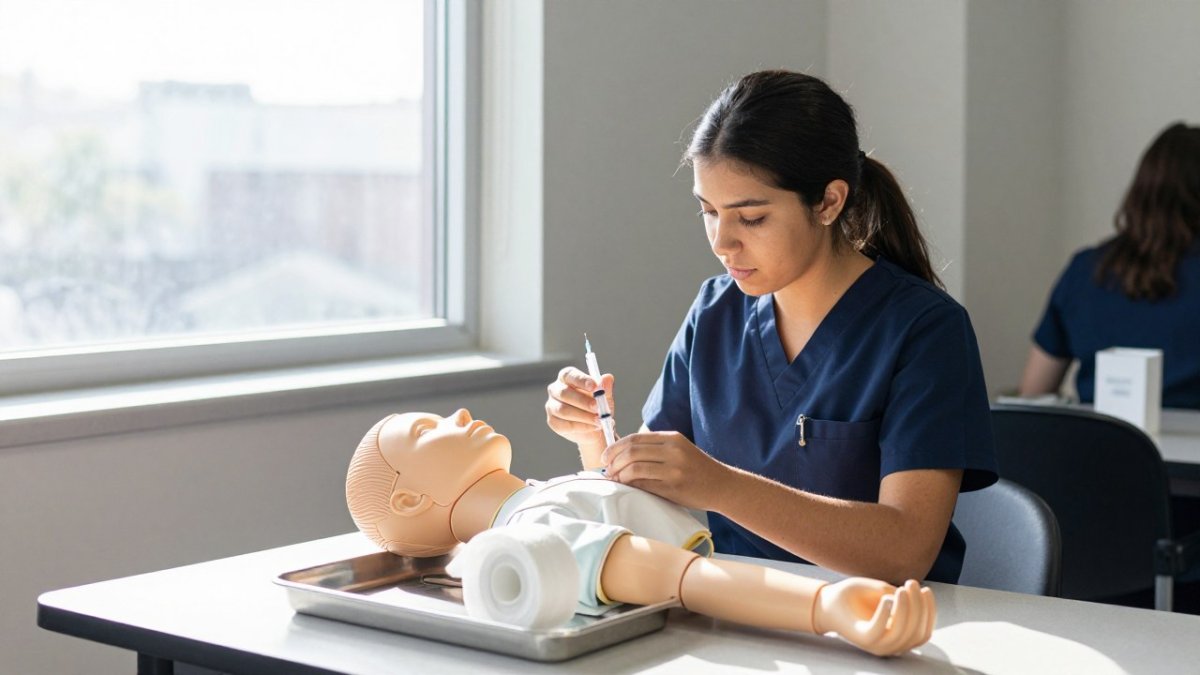
The hands-on skills training separates a real CNA education from online-only programs. You'll practice on mannequins and fellow students before working with patients in clinical settings.

Our curriculum covers vital signs (blood pressure, temperature, pulse, respiration), patient hygiene, catheter care, infection control, and safe patient handling. You'll learn to move and position patients without injuring them or yourself, a skill that prevents workplace injuries and protects vulnerable people.
The course includes communication skills specific to healthcare. Patients are often anxious, confused, or in pain. Learning to listen, respond with empathy, and report observations clearly to nurses matters as much as technical skills. We teach you to recognize when something seems wrong and escalate concerns to the right person.
Medical terminology is woven throughout. You'll learn prefixes, suffixes, and root words so medical language becomes less intimidating. This foundation helps you understand doctor's orders, read charts, and communicate professionally with the healthcare team.
Our hybrid learning model means some skills training happens in our clinical lab on campus, while theory and supplementary content lives online. This balance lets you learn anatomy and procedures at your own pace while getting hands-on practice in a structured environment with instructors present.
Infection control and safety protocols get heavy emphasis. Healthcare settings have strict rules about preventing disease transmission and protecting patients. You'll learn standard precautions, proper hand hygiene, and when to use personal protective equipment (the CDC). These practices become automatic through repetition in our labs.
CNA Certification Exam Registration After Training
CNA certification exam registration happens after you complete the program. Life Vest Training operates as an official state regional testing site, which simplifies this process. You don't have to search for an exam location or navigate confusing registration portals, we handle much of the logistics.
Once you finish the five-week program, our team provides guidance on exam scheduling. You'll register with the state, pay the exam fee, and book a test date. Most graduates schedule their exam within two weeks of program completion.
The certification exam tests both knowledge and skills. You'll answer multiple-choice questions on patient care, safety, and medical concepts. You'll also perform practical skills in front of an examiner, things like taking blood pressure, helping a patient bathe, or moving someone safely from bed to chair.
Passing rates matter, and Life Vest Training maintains a high state pass rate. When you train with us, you're learning from instructors who understand what the exam tests and what employers expect.
After you pass, you're officially a Certified Nursing Assistant. Your license is valid for a set period (typically two years), after which renewal involves continuing education hours. Many employers offer CEU opportunities, so staying current is manageable once you're working.
Hybrid Learning: In-Person Labs and Online Coursework
The hybrid learning approach combines the best of both worlds: structured hands-on training and flexible online study. You're not choosing between in-person or online, you're getting both.
In-person lab sessions happen on campus at our Petaluma location. These are where you practice patient care skills, get feedback from instructors, and build confidence handling real scenarios. Labs are scheduled during your chosen class time (day, evening, or weekend), so you know exactly when you'll be on campus.
Online coursework covers theory, medical terminology, and supplementary material. You access modules through our learning platform, watch videos, read lessons, and complete quizzes on your own schedule. This flexibility is crucial if you're working full-time or managing family responsibilities.
The balance between in-person and online varies by week. Early weeks have more classroom time as you're building foundational knowledge and practicing basic skills. Later weeks shift toward more independent study as you refine skills and prepare for certification exams.
According to research on hybrid healthcare education, combining hands-on training with flexible online learning improves retention and exam performance. Students benefit from structured lab time while maintaining the flexibility to study theory when it fits their schedule.
You'll need reliable internet access for online modules and a way to get to campus for lab sessions. If you're in Marin County, our Petaluma location is accessible by car or public transit. Discuss transportation or technical concerns with our admissions team.
The hybrid model also means you're not sitting in a classroom all day. This prevents burnout during an intensive five-week program and lets you apply what you're learning to your current job or personal life.
Choosing a CNA class starts November 9, 2026 is a concrete step toward a healthcare career. Life Vest Training's five-week program, flexible scheduling, and hybrid learning approach remove common barriers to entry. Our all-inclusive tuition covers textbooks, lab supplies, and CPR certification, no hidden fees, no surprises. Claim your seat now and join our community of graduates who've launched rewarding healthcare careers. Contact Life Vest Training to confirm availability in your preferred schedule and start your nursing assistant journey this November.
Frequently Asked Questions
When does the CNA class starting November 9, 2026, begin and end?
The CNA class starts November 9, 2026, and runs for five weeks, ending in mid-December. The exact end date depends on your schedule option, day, evening, or weekend cohorts follow the same curriculum but meet at different times. Contact Life Vest Training directly to confirm the specific end date for your chosen schedule, as dates may vary by cohort.
What are the CNA class enrollment requirements?
Enrollment requirements typically include a high school diploma or GED, proof of identity, and completion of any required health screenings. You'll also need to pass a background check. Life Vest Training will provide a complete list of required documents when you apply.
How long does CNA training take, and what's the time commitment?
The CNA training program is five weeks long, totaling 120 hours of instruction. With the hybrid learning model, you'll attend in-person hands-on labs for essential clinical skills while completing coursework online, allowing flexibility if you're working full-time. The exact daily time commitment depends on your schedule option, day classes, evening classes, or weekend options are all available.
What should I do to prepare for my CNA class starting November 9?
Before class starts, gather all required documents, review basic anatomy if you haven't studied biology recently, and ensure you have reliable transportation to the training location. Prepare a dedicated study space at home for online coursework. Confirm your schedule option and any technology requirements for the hybrid platform. Most importantly, inform your employer about your training dates if you're maintaining full-time work, the flexible schedule is designed to accommodate working students, but advance notice helps.
Claim Your Seat Now


Comments